





Early History of Carnamah
The vast Mid West region of Western Australia has been inhabited by Aboriginal people for over 30,000 years. The traditional owners of Carnamah are the Amangu and Badymia, two Aboriginal language groups whose country respectively includes the western and eastern parts of the district. Their names for parts of modern-day Carnamah are Woodadying, Gooragabba, Bedan and Boojerabba. The local Amangu group in Carnamah was known as Thowangoo.
In 1861 jeengo (white man) and Scottish immigrant Duncan Macpherson took up a number of pastoral leases in Carnamah, which adjoinined the eastern banks of the Mulliah or Yarra Yarra Lakes. He used these leases for the periodic grazing of his sheep, which were herded overland for more than 200 kilometres from Toodyay.
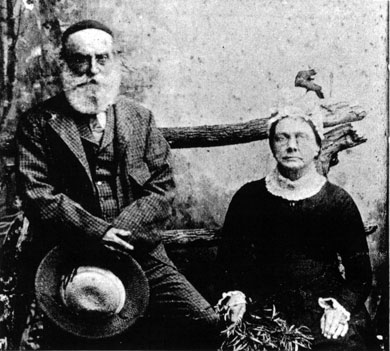
By 1866 the Nairn family had settled in the district. James and Sarah Nairn were English by birth and had both arrived in the Swan River Colony (Western Australia) with their respective parents in 1829. James had initially worked as a blacksmith with his father in Perth and then leased the property Daliak in York. He established the 33,000 acre (13,355 hectare) Noolooloo Station in Carnamah, which included the freshwater springs known to local Aboriginal people as Billeroo and Noolooroo. After about seven years on Noolooloo Sation, which included the birth of their 12th child, the Nairn family shifted to Dongara. Their son Frank remained in Carnamah as the station's manager.
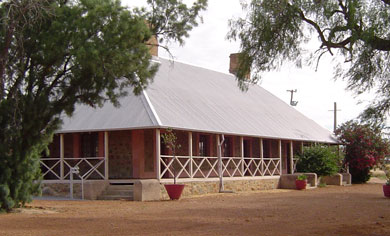
Duncan Macpherson, who had taken up pastoral leases in Carnamah in 1861, took up residence in the district with his wife Mary and their eight children in 1868. The Macpherson family had been in the Toodyay district since 1848, where they'd leased a property called The Byeen. Following a disastrous drought and a large debt, the family was evicted from The Byeen and it was this unfortunate occurrence that resulted in them shifting to Carnamah. The Macpherson family initially resided in a three-room stone cottage near the Mulliah / Yarra Yarra Lakes but a short time later settled at the freshwater Carnamah Spring where they built an impressive large stone homestead. Duncan and his sons took up additional pastoral leases and established Carnamah Station, which at its peak was over 120,000 acres (more than 48,500 hectares) in size. Most of Carnamah Station’s employees were Aboriginal people, Ticket of Leave convicts and Chinese immigrants.
During the 1860s Duncan's son Jock (or possibly Duncan himself) fathered two children, Albert Nebrong and Frances Nintigian, with Aboriginal woman Mary Wirbina. The Macpherson family didn't publically acknowledge these children at the time but maintained a close relationship with them and a number of their descendants for over 70 years.
In 1874 Carnamah’s remoteness was lessened with the establishment of a telegraph office at the Macpherson family’s homestead. The office was conducted by Duncan and Mary's daughter Bessie for the first two months and then by their daughter Maggie. For a few years, in true pioneering diversification, Duncan was the contractor to deliver mail to inland districts and stations between Perth and Geraldton.
For over 25 years the Nairn and Macpherson families were the only immigrant settlers in the Carnamah district. During this time the Macpherson family was reduced in size with the departure of the elder sons and the death of Mrs Mary Macpherson in 1888. Meanwhile the Nairn family grew in size as a result of Frank Nairn’s marriage to Harriett Long of Coorow Station in Coorow. A number of Frank and Harriett’s children were born at their home on Noolooloo Station.
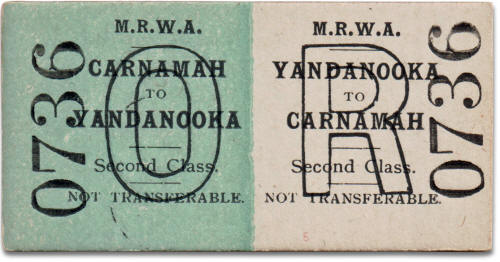
In 1894 the Midland Railway line went through and a railway station was established near the Macpherson family’s homestead, and named Carnamah after their property. The Midland Railway Company built the railway line in exchange for land from the Western Australian government. Among this land was almost all of Carnamah east of the railway line. This marked a big reduction in the size of the Macpherson and Nairn families’ stations as much of the land they had held in pastoral leases from the Government was now owned by the Midland Railway Company. Both families leased a lesser amount of land from the Company, and fortunately for the Macpherson family they also held land on the western side of the railway line.
The arrival of the railway marked the dawn of further settlement in the district. Railway workers were stationed at Carnamah, including a railway stationmaster, fettlers and a ganger. From 1901 brothers Joe and Lou Parker worked in and near Carnamah cutting timber for mines; and others including Harry Markham are known to have worked through the district cutting sandalwood trees for export.
Duncan Macpherson died in 1898 and his sons George and Donald became the joint proprietors of Carnamah Station. They traded in partnership as Macpherson Bros and bred horses in Carnamah which were shipped to Singapore after being herded overland to Perth. They also bred and grazed sheep and cattle, cut and transported timber to the Great Fingal Mine in Cue, and carted goods and supplies out to mining operations at Rothsay. Following George’s death in 1904, Donald became the station’s sole owner.
Over the years that followed Carnamah Station slowly reduced in size as Donald began leasing lesser amounts of land. Donald and his sisters Maggie and Bessie continued to reside in the family’s large homestead. Donald was assisted in running the station by skilled shepherds and stockmen, most of whom were Aboriginal men including Carnamah Tommy, Joachim Dido, Harry Walya, Jim Crow, and Jack Callery.
In 1906 brothers Joe and Lou Parker, who had been timber cutting locally, began farming at Winchester (the southern half of the Carnamah district). The Midland Railway Company bestowed the very English name of 'Winchester' despite the public's preference to use the local Aboriginal name for the area, which was Bedan.
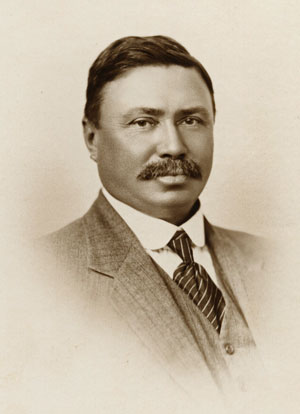
Meanwhile the Nairn family’s pastoral operations in the district passed to a third generation with Frank Nairn retiring to Dongara and his elder sons Ned and Harold taking over the grazing of livestock in the district. The two Nairn brothers leased 9,000 acres of land from the Midland Railway Company, owned the freehold blocks surrounding Billeroo and Noolooroo springs, and had 1,600 acres in Conditional Purchase leases at Petan Creek in Winchester (South Carnamah). In 1908 they purchased Yarrabubba Station in Nannine, after which they wound down their operations in Carnamah and left the district. Their 1,600 acres in Conditional Purchase leases at Petan Creek were sold to Perth accountant JLB Weir and farmed by his brother-in-law Fred Parrick.
By 1910 a few farmers had taken up virgin land between the railway line and the Mulliah / Yarra Yarra Lakes. Among them were Dewar Bros, Robert Parsons, Green Bros and Alf Hollingsworth. The Macpherson and Nairn families and most of these early settlers were predominantly involved in the grazing and breeding of livestock. In 1913 Arthur Darling settled on 16,080 acres on the east side of the railway line and two years later he became the first farmer in the district to grow wheat on a large scale.
The first known organisation to be formed in Carnamah was the Carnamah Progress Association, which was operating in 1912 when the Carnamah State School was established. The next year the townsite of Carnamah was declared, although it would be years before an actual town would come into being.
Up until 1909 the Midland Railway Company had only made one land sale in Carnamah, which was an 11,000 acre block of virgin bush to Donald Macpherson. In 1910 the Company devised the Improved Farms Scheme to accelerate land sales and settlement in the district, which would also increase traffic and profits for their railway. The scheme was to subdivide some of their land into "Ready-Made Farms" of about 400 acres in size. These farms were partially cleared of virgin bush, fenced and were to contain a four-roomed weaterboard house, dam and 1,000 gallon rainwater tank. This resulted in a large number of clearing, fencing and building contractors working in the district in 1912 and 1913 – as 45 Ready-Made Farms were created in Carnamah and Winchester.
The Ready-Made Farms were heavily advertised in overseas British newspapers and as a result about 20 families purchased and settled on the farms between 1913 and 1916. Most of these settlers were British citizens from Scotland, England, India and South Africa – and many had no practical knowledge of farming. Ready-Made Farms in Carnamah and Winchester, in order of contract signing, were taken up by John Raffan, Major Hoskyns-Abrahall, Hans Haussler, Jack Colpitts, Jack Lawson, George Reid and Amy Taunton, John Lang, Randolph Christie, John McIntosh, Edward Bell, Robert Niven, James Hunter, Harry Watson, Bowman & Forrester, Richard Robertson, John Rooke, Charlie Turner, John Rankine, Dibgy Nelson, and Agnes Lawson.
The Ready-Made Farms were drastically overpriced and local conditions had been falsely represented by the Midland Railway Company. Most of the settlers soon realised the farms were so overpriced that they’d never make enough money to be able to pay for them. The settlers demanded the prices of their farms be reduced as they had been misled about factors such as rainfall, expected yields and profits. The Midland Railway Company initially rejected their claims – to the end that the settlers formed an association to tackle the Company and wrote several letters to leading Western Australian newspapers. This onslaught of bad feeling about the Company’s Ready-Made Farms resulted in a halt of land sales in the district. By 1919 those on the Company’s farms declared that the prices of the farms would have to be significantly reduced or almost all of the settlers would be forced to abandon their properties. After almost four years of battling with the Company, the settlers were given a fairer deal and the prices of their farms were reduced by 40 percent.
When most of the settlers on the Midland Railway Company’s farms had arrived in the district the townsite of Carnamah consisted solely of the railway siding, Harry Parkin’s house and the Davieson family’s general store. In 1916 the Parkin family opened a second general store from their home, and later established a blacksmithing business.
The first large social event to occur in Carnamah was a Sports & Races Day which took place on 4 May 1916. The day consisted of children’s sports in the morning, horse races in the afternoon and a dance in the local railway goods shed in the evening. The event was very well attended by Carnamah residents in addition to visitors from neighbouring districts and raised £48 for the Red Cross, who were in need of funds due to the First World War. Despite having a small population over 35 men from Carnamah and Winchester served in the Armed Forces during the war, and ten of these brave men were killed in action. The end of the war was marked in Carnamah with the holding of Peace Day Celebrations on 19 July 1919.
Between 1919 and 1923 the Repatriation Department established four soldier settlement estates in the district using land purchased from Donald Macpherson, the Midland Railway Company, Lou Parker and Arthur Darling. These four parcels of land became the Yarra Yarra, Carnamah, Winchester and Inering estates. Each estate was subdivided into a number of farms and these were allocated to about 40 ex-servicemen from the First World War. This significantly increased Carnamah’s population as with these men also came their families and the need for large numbers of farmhands, labourers, clearers and contractors.
Under the chairmanship of John Lang a local committee was formed to raise the necessary capital to have a hall built in Carnamah. The committee members were successful at their task and the Carnamah Town Hall was officially opened on 17 February 1921 by Donald Macpherson, who by that time had lived in Carnamah for over 50 years. The hall was used for the district's first agricultural show later in 1921, which was conducted by the Carnamah-Winchester branch of the Primary Producers' Association.
By this time the town had only a few more buildings – among them being Bob Palfreyman’s one-roomed humpy and Teddy Clark’s small house. Later in 1921 Lou Parker, an early farmer at Winchester, shifted to the Carnamah townsite where he had a general store and large stone house built. In 1924 a stone hotel was built, which was initially run by Mrs Martha Davies, and Leslie Trotter opened a bakery and general store. The next additions to the town included Green Bros’ butcher’s shop, Stan O’Grady’s garage, Charlie Kroschel’s The Don Tearooms and Henry Parkin & Son’s power station.
Local farmers Donald Macpherson, Arthur Darling and John Bowman all served representing Carnamah on the Upper Irwin Road Board (later renamed the Mingenew Road Board). In 1923 the Carnamah District Road Board was declared and on formation spanned from Three Springs in the north to Gunyidi in the south, with Carnamah as its administrative centre. An election for the new Board was held on 17 November 1923 with John Bowman and Donald Macpherson being elected as members for Carnamah, Bill Lawson for Winchester, and others to represent Three Springs, Coorow and Marchagee. Carnamah farmer John Bowman was the Board’s first chairman.
The telephone arrived in Carnamah in 1923 and the first townsperson to be connected was Lou Parker. The next year John Bowman became the first farmer to have the telephone. Separate telephone exchanges were established on the Inering Estate in 1924 and at Winchester in 1925.
In 1924 Donald Macpherson sold 11,000 acres of his land situated between Carnamah and Three Springs to Ned and Harold Nairn, who had grown up on Noolooloo Station and had been graziers in Carnamah until leaving over a decade earlier. Harold and his wife Eva shifted to Carnamah shortly afterwards, marking the return of one of the district’s earliest agriucltural families.
By this time local farmers were starting to grow large amounts of wheat and Carnamah began to be seen as a successful and worthwhile agricultural district. As a result, the Midland Railway Company was able to sell almost the entirety of its remaining land in the district. By the end of the 1920s the farming population had soared and large amounts of land had been transformed from virgin bush to paddocks. Carnamah soon attracted attention for being one of the highest wheat producing districts in Western Australia.
The growth of the Carnamah townsite stalled before very quickly catching up with the sudden growth that had occurred of the district. In 1929 and early 1930 the town grew at in incredible rate, often remarked to have "sprung up overnight like a field of mushrooms". By 1930 the town's businesses included five general stores, three tearooms, a hotel, boarding house, post office, bakery, tailor, dentist, chemist, doctor, hospital, solicitor, builder, four mechanical garages, two churches, accountant, two banks, newsagency, hairdresser, barber, power station, two butchers and a number of commission agents who were sellers of agricultural machinery and farm requirements. Within another few years the town also boasted a vet, a newspaper printing office, police station and a resident police constable. A small townsite also established at Winchester and consisted of a general store, school and a few houses.
Local clubs in existence around this time included football, tennis, cricket, badminton, race, basketball, athletic, golf, soccer, dingo, girls and repertory. Other organisations such as an Agricultural Society, Silo Club, Literacy and Debating Society, Toc H group, Adult Education Circle, Masonic Lodge, Manchester Unity of Oddfellows Friendly Society Lodge, Boy Scouts, Traders' Association, Ratepayers & Citizens' Association and Parents & Citizens' Association were also operating in addition to branches of the Country Women’s Association, Returned Soldiers' League, Primary Producers Association, and Wheatgrowers Union.
With the Great Depression came a horrific drop in wheat prices. Many local farmers made a loss on wheat over consecutive years, and some were forced to abandon their properties. A large number of Carnamah farmers had been deriving their income solely from the growing of wheat and as a result mixed farming became more popular. Many introduced livestock such as sheep and cattle to their properties, and in 1933 a number of farmers began to grow barley for the first time.
The town of Carnamah was thriving and undoubtedly at its peak during the early years of the Great Depression. Through a mix of financial strain, advances in farm machinery and the beginning of farms getting bigger, the population began to decline. By the end of the 1930s the town no longer had a vet, chemist, doctor, hospital, tailor, dentist, solicitor or boarding house; and one of its general stores had burnt down.
Donald Macpherson, affectionately reffered to as the "Father of Carnamah", passed away in 1931, aged 73 years. Donald was the first to represent Carnamah on the Upper Irwin Road Board, a founding member of the Carnamah District Road Board and had served as president or patron of almost every local organisation. He was the leader of the annual Carnamah kangaroo hunt and was known for his generosity at the hunts for lending a horse to anyone who didn’t have one. On the day of his funeral all businesses in Carnamah were closed as a mark of respect. Donald was survived by his sister Bessie, who continued to reside at the family homestead in Carnamah until her death at the age of 87 years in 1939.
Following the outbreak of the Second World War a militia unit was formed in Carnamah and trained fortnightly under the direction of Ivan Johnson and Dave Bowman. Later in 1939 local branches of the Red Cross Society and Australian Defence League were established, and were followed by the Carnamah District War and Patriotic Fund, Volunteer Defence Corps, and Air Observation Corps. The first person from the district to enlist in the Armed Forces was farmhand George McGowan, who enlisted in the Australian Army on 11 November 1939 and was Killed in Action on 23 May 1941. Large numbers of men and nine women enlisted in 1942 and others to give the ultimate sacrifice were Ivan Johnson, Bill Clark, Bernie O’Hara and Ken Lally.
With so many serving in the Armed Forces and the subsequent labour shortage, many local farms and businesses were kept going only through the untiring efforts of the district’s women. The majority of local organisations and social events were suspended owing to a reduced population, petrol rationing and a large workload for those who remained. The district later fell into darkness with a compulsory blackout of all vehicle, house and street lights.
Celebrations instantly began when the news of peace was received in Carnamah on the morning of Wednesday 22 August 1945. The war was over and the streets of Carnamah resounded with church bells ringing, kerosene tins being donged by children and the constant tooting of car horns. In addition to the devastating human casualties from the war it had also adversely affected the town, with the closure of one of its banks and the local newspaper office.
After the Second World War there was another round of soldier settlement in the district. The War Service Land Settlement scheme subdivided the enormous property of the late Gus Liebe, which was partly in Carnamah, into 17 farms; and developed land at Eneabba, west of Carnamah, into 36 farms – all of which were allocated to returned servicemen from the war.
Related Content
● Local Aboriginal Vocabulary from Baandee
● Biographical Dictionary of Carnamah
● Virtual Museum - The Macpherson Family
● The Story of Ah Sue: a Chinamen
● Virtual Museum - Midland Railway
● Virtual Museum - Ready-Made Farms
● Carnamah at the National Museum of Australia
● War Service Land Settlement in Eneabba
● 150th of the Macpherson Family in Carnamah
● Early Histories of Coorow and Three Springs
● Carnamah Museum and Macpherson Homestead
About This History
This is an evolving history by Andrew Bowman-Bright, written between 2005 and 2022.
The vast Mid West region of Western Australia has been inhabited by Aboriginal people for over 30,000 years. The traditional owners of Carnamah are the Amangu and Badymia, two Aboriginal language groups whose country respectively includes the western and eastern parts of the district. Their names for parts of modern-day Carnamah are Woodadying, Gooragabba, Bedan and Boojerabba. The local Amangu group in Carnamah was known as Thowangoo.
In 1861 jeengo (white man) and Scottish immigrant Duncan Macpherson took up a number of pastoral leases in Carnamah, which adjoinined the eastern banks of the Mulliah or Yarra Yarra Lakes. He used these leases for the periodic grazing of his sheep, which were herded overland for more than 200 kilometres from Toodyay.
By 1866 the Nairn family had settled in the district. James and Sarah Nairn were English by birth and had both arrived in the Swan River Colony (Western Australia) with their respective parents in 1829. James had initially worked as a blacksmith with his father in Perth and then leased the property Daliak in York. He established the 33,000 acre (13,355 hectare) Noolooloo Station in Carnamah, which included the freshwater springs known to local Aboriginal people as Billeroo and Noolooroo. After about seven years on Noolooloo Sation, which included the birth of their 12th child, the Nairn family shifted to Dongara. Their son Frank remained in Carnamah as the station's manager.
Duncan Macpherson, who had taken up pastoral leases in Carnamah in 1861, took up residence in the district with his wife Mary and their eight children in 1868. The Macpherson family had been in the Toodyay district since 1848, where they'd leased a property called The Byeen. Following a disastrous drought and a large debt, the family was evicted from The Byeen and it was this unfortunate occurrence that resulted in them shifting to Carnamah. The Macpherson family initially resided in a three-room stone cottage near the Mulliah / Yarra Yarra Lakes but a short time later settled at the freshwater Carnamah Spring where they built an impressive large stone homestead. Duncan and his sons took up additional pastoral leases and established Carnamah Station, which at its peak was over 120,000 acres (more than 48,500 hectares) in size. Most of Carnamah Station’s employees were Aboriginal people, Ticket of Leave convicts and Chinese immigrants.
During the 1860s Duncan's son Jock (or possibly Duncan himself) fathered two children, Albert Nebrong and Frances Nintigian, with Aboriginal woman Mary Wirbina. The Macpherson family didn't publically acknowledge these children at the time but maintained a close relationship with them and a number of their descendants for over 70 years.
In 1874 Carnamah’s remoteness was lessened with the establishment of a telegraph office at the Macpherson family’s homestead. The office was conducted by Duncan and Mary's daughter Bessie for the first two months and then by their daughter Maggie. For a few years, in true pioneering diversification, Duncan was the contractor to deliver mail to inland districts and stations between Perth and Geraldton.
For over 25 years the Nairn and Macpherson families were the only immigrant settlers in the Carnamah district. During this time the Macpherson family was reduced in size with the departure of the elder sons and the death of Mrs Mary Macpherson in 1888. Meanwhile the Nairn family grew in size as a result of Frank Nairn’s marriage to Harriett Long of Coorow Station in Coorow. A number of Frank and Harriett’s children were born at their home on Noolooloo Station.
In 1894 the Midland Railway line went through and a railway station was established near the Macpherson family’s homestead, and named Carnamah after their property. The Midland Railway Company built the railway line in exchange for land from the Western Australian government. Among this land was almost all of Carnamah east of the railway line. This marked a big reduction in the size of the Macpherson and Nairn families’ stations as much of the land they had held in pastoral leases from the Government was now owned by the Midland Railway Company. Both families leased a lesser amount of land from the Company, and fortunately for the Macpherson family they also held land on the western side of the railway line.
The arrival of the railway marked the dawn of further settlement in the district. Railway workers were stationed at Carnamah, including a railway stationmaster, fettlers and a ganger. From 1901 brothers Joe and Lou Parker worked in and near Carnamah cutting timber for mines; and others including Harry Markham are known to have worked through the district cutting sandalwood trees for export.
Duncan Macpherson died in 1898 and his sons George and Donald became the joint proprietors of Carnamah Station. They traded in partnership as Macpherson Bros and bred horses in Carnamah which were shipped to Singapore after being herded overland to Perth. They also bred and grazed sheep and cattle, cut and transported timber to the Great Fingal Mine in Cue, and carted goods and supplies out to mining operations at Rothsay. Following George’s death in 1904, Donald became the station’s sole owner.
Over the years that followed Carnamah Station slowly reduced in size as Donald began leasing lesser amounts of land. Donald and his sisters Maggie and Bessie continued to reside in the family’s large homestead. Donald was assisted in running the station by skilled shepherds and stockmen, most of whom were Aboriginal men including Carnamah Tommy, Joachim Dido, Harry Walya, Jim Crow, and Jack Callery.
In 1906 brothers Joe and Lou Parker, who had been timber cutting locally, began farming at Winchester (the southern half of the Carnamah district). The Midland Railway Company bestowed the very English name of 'Winchester' despite the public's preference to use the local Aboriginal name for the area, which was Bedan.
Meanwhile the Nairn family’s pastoral operations in the district passed to a third generation with Frank Nairn retiring to Dongara and his elder sons Ned and Harold taking over the grazing of livestock in the district. The two Nairn brothers leased 9,000 acres of land from the Midland Railway Company, owned the freehold blocks surrounding Billeroo and Noolooroo springs, and had 1,600 acres in Conditional Purchase leases at Petan Creek in Winchester (South Carnamah). In 1908 they purchased Yarrabubba Station in Nannine, after which they wound down their operations in Carnamah and left the district. Their 1,600 acres in Conditional Purchase leases at Petan Creek were sold to Perth accountant JLB Weir and farmed by his brother-in-law Fred Parrick.
By 1910 a few farmers had taken up virgin land between the railway line and the Mulliah / Yarra Yarra Lakes. Among them were Dewar Bros, Robert Parsons, Green Bros and Alf Hollingsworth. The Macpherson and Nairn families and most of these early settlers were predominantly involved in the grazing and breeding of livestock. In 1913 Arthur Darling settled on 16,080 acres on the east side of the railway line and two years later he became the first farmer in the district to grow wheat on a large scale.
The first known organisation to be formed in Carnamah was the Carnamah Progress Association, which was operating in 1912 when the Carnamah State School was established. The next year the townsite of Carnamah was declared, although it would be years before an actual town would come into being.
Up until 1909 the Midland Railway Company had only made one land sale in Carnamah, which was an 11,000 acre block of virgin bush to Donald Macpherson. In 1910 the Company devised the Improved Farms Scheme to accelerate land sales and settlement in the district, which would also increase traffic and profits for their railway. The scheme was to subdivide some of their land into "Ready-Made Farms" of about 400 acres in size. These farms were partially cleared of virgin bush, fenced and were to contain a four-roomed weaterboard house, dam and 1,000 gallon rainwater tank. This resulted in a large number of clearing, fencing and building contractors working in the district in 1912 and 1913 – as 45 Ready-Made Farms were created in Carnamah and Winchester.
The Ready-Made Farms were heavily advertised in overseas British newspapers and as a result about 20 families purchased and settled on the farms between 1913 and 1916. Most of these settlers were British citizens from Scotland, England, India and South Africa – and many had no practical knowledge of farming. Ready-Made Farms in Carnamah and Winchester, in order of contract signing, were taken up by John Raffan, Major Hoskyns-Abrahall, Hans Haussler, Jack Colpitts, Jack Lawson, George Reid and Amy Taunton, John Lang, Randolph Christie, John McIntosh, Edward Bell, Robert Niven, James Hunter, Harry Watson, Bowman & Forrester, Richard Robertson, John Rooke, Charlie Turner, John Rankine, Dibgy Nelson, and Agnes Lawson.
The Ready-Made Farms were drastically overpriced and local conditions had been falsely represented by the Midland Railway Company. Most of the settlers soon realised the farms were so overpriced that they’d never make enough money to be able to pay for them. The settlers demanded the prices of their farms be reduced as they had been misled about factors such as rainfall, expected yields and profits. The Midland Railway Company initially rejected their claims – to the end that the settlers formed an association to tackle the Company and wrote several letters to leading Western Australian newspapers. This onslaught of bad feeling about the Company’s Ready-Made Farms resulted in a halt of land sales in the district. By 1919 those on the Company’s farms declared that the prices of the farms would have to be significantly reduced or almost all of the settlers would be forced to abandon their properties. After almost four years of battling with the Company, the settlers were given a fairer deal and the prices of their farms were reduced by 40 percent.
When most of the settlers on the Midland Railway Company’s farms had arrived in the district the townsite of Carnamah consisted solely of the railway siding, Harry Parkin’s house and the Davieson family’s general store. In 1916 the Parkin family opened a second general store from their home, and later established a blacksmithing business.
The first large social event to occur in Carnamah was a Sports & Races Day which took place on 4 May 1916. The day consisted of children’s sports in the morning, horse races in the afternoon and a dance in the local railway goods shed in the evening. The event was very well attended by Carnamah residents in addition to visitors from neighbouring districts and raised £48 for the Red Cross, who were in need of funds due to the First World War. Despite having a small population over 35 men from Carnamah and Winchester served in the Armed Forces during the war, and ten of these brave men were killed in action. The end of the war was marked in Carnamah with the holding of Peace Day Celebrations on 19 July 1919.
Between 1919 and 1923 the Repatriation Department established four soldier settlement estates in the district using land purchased from Donald Macpherson, the Midland Railway Company, Lou Parker and Arthur Darling. These four parcels of land became the Yarra Yarra, Carnamah, Winchester and Inering estates. Each estate was subdivided into a number of farms and these were allocated to about 40 ex-servicemen from the First World War. This significantly increased Carnamah’s population as with these men also came their families and the need for large numbers of farmhands, labourers, clearers and contractors.
Under the chairmanship of John Lang a local committee was formed to raise the necessary capital to have a hall built in Carnamah. The committee members were successful at their task and the Carnamah Town Hall was officially opened on 17 February 1921 by Donald Macpherson, who by that time had lived in Carnamah for over 50 years. The hall was used for the district's first agricultural show later in 1921, which was conducted by the Carnamah-Winchester branch of the Primary Producers' Association.
By this time the town had only a few more buildings – among them being Bob Palfreyman’s one-roomed humpy and Teddy Clark’s small house. Later in 1921 Lou Parker, an early farmer at Winchester, shifted to the Carnamah townsite where he had a general store and large stone house built. In 1924 a stone hotel was built, which was initially run by Mrs Martha Davies, and Leslie Trotter opened a bakery and general store. The next additions to the town included Green Bros’ butcher’s shop, Stan O’Grady’s garage, Charlie Kroschel’s The Don Tearooms and Henry Parkin & Son’s power station.
Local farmers Donald Macpherson, Arthur Darling and John Bowman all served representing Carnamah on the Upper Irwin Road Board (later renamed the Mingenew Road Board). In 1923 the Carnamah District Road Board was declared and on formation spanned from Three Springs in the north to Gunyidi in the south, with Carnamah as its administrative centre. An election for the new Board was held on 17 November 1923 with John Bowman and Donald Macpherson being elected as members for Carnamah, Bill Lawson for Winchester, and others to represent Three Springs, Coorow and Marchagee. Carnamah farmer John Bowman was the Board’s first chairman.
The telephone arrived in Carnamah in 1923 and the first townsperson to be connected was Lou Parker. The next year John Bowman became the first farmer to have the telephone. Separate telephone exchanges were established on the Inering Estate in 1924 and at Winchester in 1925.
In 1924 Donald Macpherson sold 11,000 acres of his land situated between Carnamah and Three Springs to Ned and Harold Nairn, who had grown up on Noolooloo Station and had been graziers in Carnamah until leaving over a decade earlier. Harold and his wife Eva shifted to Carnamah shortly afterwards, marking the return of one of the district’s earliest agriucltural families.
By this time local farmers were starting to grow large amounts of wheat and Carnamah began to be seen as a successful and worthwhile agricultural district. As a result, the Midland Railway Company was able to sell almost the entirety of its remaining land in the district. By the end of the 1920s the farming population had soared and large amounts of land had been transformed from virgin bush to paddocks. Carnamah soon attracted attention for being one of the highest wheat producing districts in Western Australia.
The growth of the Carnamah townsite stalled before very quickly catching up with the sudden growth that had occurred of the district. In 1929 and early 1930 the town grew at in incredible rate, often remarked to have "sprung up overnight like a field of mushrooms". By 1930 the town's businesses included five general stores, three tearooms, a hotel, boarding house, post office, bakery, tailor, dentist, chemist, doctor, hospital, solicitor, builder, four mechanical garages, two churches, accountant, two banks, newsagency, hairdresser, barber, power station, two butchers and a number of commission agents who were sellers of agricultural machinery and farm requirements. Within another few years the town also boasted a vet, a newspaper printing office, police station and a resident police constable. A small townsite also established at Winchester and consisted of a general store, school and a few houses.
Local clubs in existence around this time included football, tennis, cricket, badminton, race, basketball, athletic, golf, soccer, dingo, girls and repertory. Other organisations such as an Agricultural Society, Silo Club, Literacy and Debating Society, Toc H group, Adult Education Circle, Masonic Lodge, Manchester Unity of Oddfellows Friendly Society Lodge, Boy Scouts, Traders' Association, Ratepayers & Citizens' Association and Parents & Citizens' Association were also operating in addition to branches of the Country Women’s Association, Returned Soldiers' League, Primary Producers Association, and Wheatgrowers Union.
With the Great Depression came a horrific drop in wheat prices. Many local farmers made a loss on wheat over consecutive years, and some were forced to abandon their properties. A large number of Carnamah farmers had been deriving their income solely from the growing of wheat and as a result mixed farming became more popular. Many introduced livestock such as sheep and cattle to their properties, and in 1933 a number of farmers began to grow barley for the first time.
The town of Carnamah was thriving and undoubtedly at its peak during the early years of the Great Depression. Through a mix of financial strain, advances in farm machinery and the beginning of farms getting bigger, the population began to decline. By the end of the 1930s the town no longer had a vet, chemist, doctor, hospital, tailor, dentist, solicitor or boarding house; and one of its general stores had burnt down.
Donald Macpherson, affectionately reffered to as the "Father of Carnamah", passed away in 1931, aged 73 years. Donald was the first to represent Carnamah on the Upper Irwin Road Board, a founding member of the Carnamah District Road Board and had served as president or patron of almost every local organisation. He was the leader of the annual Carnamah kangaroo hunt and was known for his generosity at the hunts for lending a horse to anyone who didn’t have one. On the day of his funeral all businesses in Carnamah were closed as a mark of respect. Donald was survived by his sister Bessie, who continued to reside at the family homestead in Carnamah until her death at the age of 87 years in 1939.
Following the outbreak of the Second World War a militia unit was formed in Carnamah and trained fortnightly under the direction of Ivan Johnson and Dave Bowman. Later in 1939 local branches of the Red Cross Society and Australian Defence League were established, and were followed by the Carnamah District War and Patriotic Fund, Volunteer Defence Corps, and Air Observation Corps. The first person from the district to enlist in the Armed Forces was farmhand George McGowan, who enlisted in the Australian Army on 11 November 1939 and was Killed in Action on 23 May 1941. Large numbers of men and nine women enlisted in 1942 and others to give the ultimate sacrifice were Ivan Johnson, Bill Clark, Bernie O’Hara and Ken Lally.
With so many serving in the Armed Forces and the subsequent labour shortage, many local farms and businesses were kept going only through the untiring efforts of the district’s women. The majority of local organisations and social events were suspended owing to a reduced population, petrol rationing and a large workload for those who remained. The district later fell into darkness with a compulsory blackout of all vehicle, house and street lights.
Celebrations instantly began when the news of peace was received in Carnamah on the morning of Wednesday 22 August 1945. The war was over and the streets of Carnamah resounded with church bells ringing, kerosene tins being donged by children and the constant tooting of car horns. In addition to the devastating human casualties from the war it had also adversely affected the town, with the closure of one of its banks and the local newspaper office.
After the Second World War there was another round of soldier settlement in the district. The War Service Land Settlement scheme subdivided the enormous property of the late Gus Liebe, which was partly in Carnamah, into 17 farms; and developed land at Eneabba, west of Carnamah, into 36 farms – all of which were allocated to returned servicemen from the war.
Related Content
● Local Aboriginal Vocabulary from Baandee
● Biographical Dictionary of Carnamah
● Virtual Museum - The Macpherson Family
● The Story of Ah Sue: a Chinamen
● Virtual Museum - Midland Railway
● Virtual Museum - Ready-Made Farms
● Carnamah at the National Museum of Australia
● War Service Land Settlement in Eneabba
● 150th of the Macpherson Family in Carnamah
● Early Histories of Coorow and Three Springs
● Carnamah Museum and Macpherson Homestead
About This History
This is an evolving history by Andrew Bowman-Bright, written between 2005 and 2022.
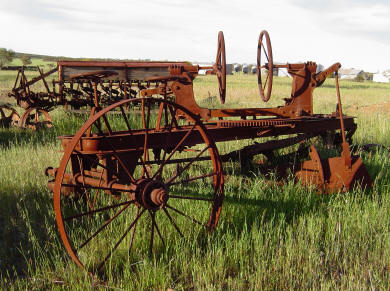
Rusting grader in a Carnamah paddock in 2004
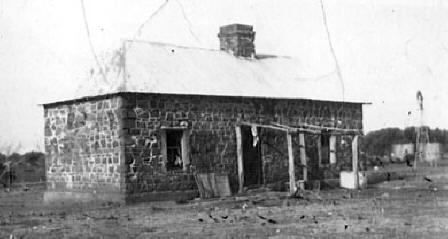
The Macpherson's first home in Carnamah
near the the Mulliah / Yarra Yarra Lakes
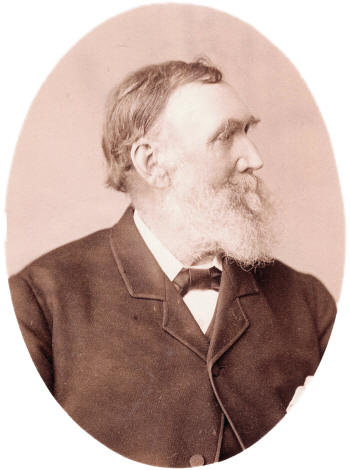
Duncan Macpherson
who was born in Scotland died at Carnamah
James and Sarah Nairn,
who established Noolooloo Station
The Macpherson's Homestead in 2004,
located just east of the Carnamah townsite
"Ned" Edward Frank William Nairn
Midland Railway return ticket
from Carnamah to Yandanooka
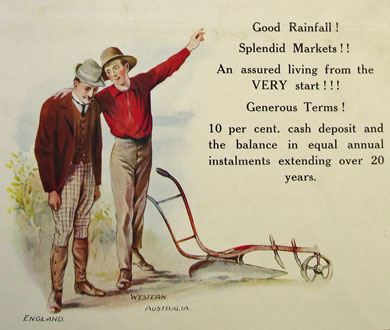
Overseas marketing of the Ready-Made Farms
encouraging the British to purchase and immigrate
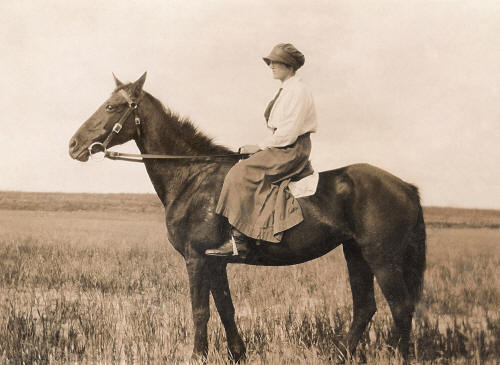
Miss Vi Bowman who settled with her parents
on a Ready-Made Farm in Carnamah in 1915
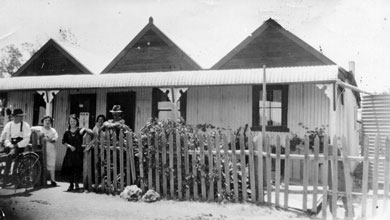
The Parkin family's home The Gables
at 4 Yarra Street, Carnamah
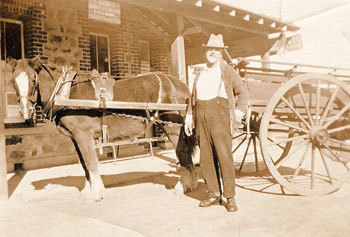
Bob Palfreyman outside the Carnamah Hotel
at 22 Macpherson Street, Carnamah

Repatriation Department stamp
for returned soldiers applying to take up land
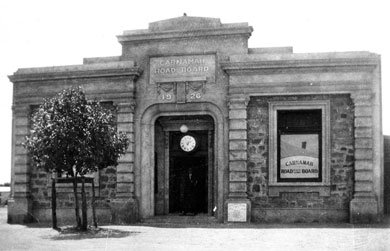
Offices of the Carnamah District Road Board
built onto the front of the Carnamah Hall in 1926
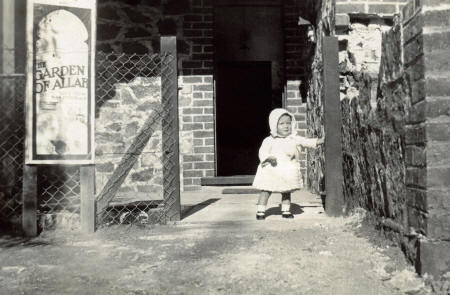
Granddaughter of Charlie Kroschel
at extensions to his The Don Tearooms in 1929
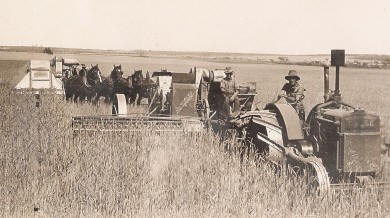
Harvest by both horse and tractor
on Rosebury Row, the farm of Roger Clark
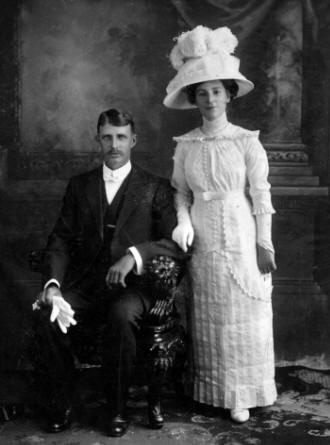
Harold Nairn and his wife Eva
of Lakeview Farm, Carnamah
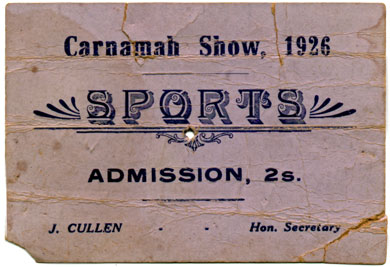
1926 ticket to annual show and sports of
the Carnamah District Agricultural Society
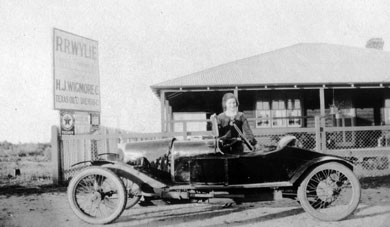
Home & Agency Business of Ray Wylie
at 17 Boojerabba Street, now Robertson Street
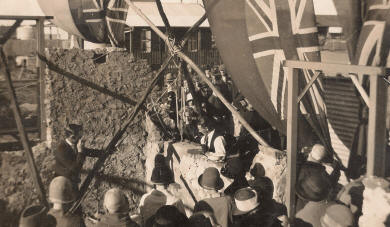
The laying of the foundation stone of the
Presbyterian Church on Macpherson Street in 1927
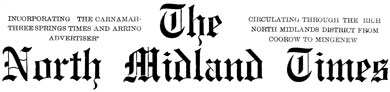
Header of locally produced regional newspaper,
which was produced in Carnamah 1933-1945
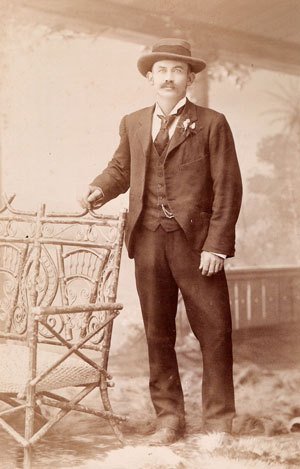
Donald Macpherson,
also known as the "Father of Carnamah"
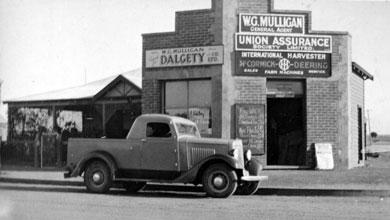
Home & Business of George Mulligan
at 15 Macpherson Street, Carnamah
